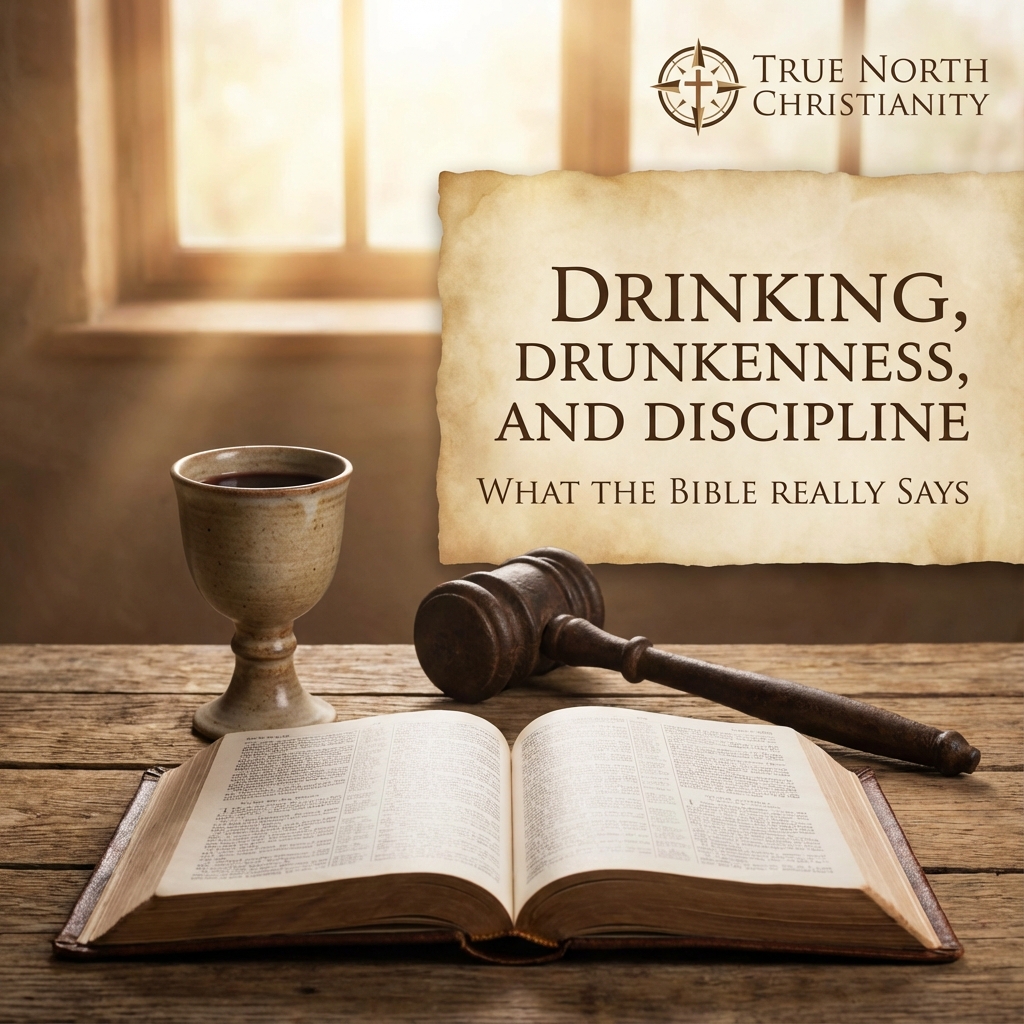
Drinking, Drunkenness, and Discipline: What the Bible Really Says
What Scripture Teaches About Alcohol, Sobriety, and Setting the Right Example
🍷 Introduction: A Culture of Justification
The cultural acceptance of alcohol has reached the Church.
What used to be a line of separation is now a point of pride — “Jesus drank wine,” “It’s legal,” and “Everything in moderation.”
Yet, as followers of Christ, the question isn’t merely whether something is legal or socially acceptable. The real question is:
Does it glorify God and protect those around me from stumbling?
“Therefore, whether you eat or drink, or whatever you do, do all to the glory of God.”
— 1 Corinthians 10:31
The Bible doesn’t forbid all alcohol consumption — but it clearly warns of the spiritual, physical, and moral dangers of indulgence. And just because something isn’t forbidden doesn’t mean it’s wise.
⚖️ Legal Doesn’t Mean Biblical
Modern culture equates legality with morality — but permission doesn’t equal purity.
The government may approve of something that God calls sin.
Many Christians excuse drinking because “it’s fine in moderation,” but moderation has a way of drifting into indulgence when culture normalizes overindulgence.
“All things are lawful for me, but not all things are helpful; all things are lawful for me, but I will not be mastered by anything.”
— 1 Corinthians 6:12
If a substance controls your mood, your mind, or your ability to discern right from wrong, you’ve already crossed the biblical line.
Christians are not called to escape reality — they’re called to live in truth and clarity.
🧑🏫 Historical Context: The “Wine” of the Bible
In biblical times, the “wine” commonly consumed was significantly weaker than modern alcoholic beverages.
- Ancient wine was typically diluted with water, often at ratios of 3:1 to 10:1 (water to wine).
- This dilution killed bacteria in ancient water sources while preventing intoxication.
- Drunkenness — even in that environment — was still rebuked and viewed as shameful and foolish.
So when people today cite “Jesus turned water into wine” (John 2:1–11) as defense, they often misunderstand that first-century wine was far from the high-proof beverages of today.
“Do not get drunk on wine, which leads to debauchery. Instead, be filled with the Spirit.”
— Ephesians 5:18
The message was clear then — and remains clear now: control belongs to the Spirit, not to the substance.
🧠 Biblical Teaching: Be Sober, Be Wise
Over and over, Scripture commands believers to remain sober-minded — not occasionally sober, but continually alert, disciplined, and ready.
“Be sober, be vigilant; because your adversary the devil walks about like a roaring lion, seeking whom he may devour.”
— 1 Peter 5:8
Alcohol fogs discernment, lowers spiritual awareness, and opens the door for careless words and actions.
When the Bible says “be sober-minded,” it isn’t just a warning against addiction — it’s a command toward devotion.
Sobriety allows clarity. Clarity produces holiness.
💔 The Danger of Leading Others to Stumble
Even if your personal conviction allows a drink, the public example of drinking can influence others who are weaker in faith or recovering from bondage. The apostle Paul gave an unambiguous standard:
“It is good neither to eat meat nor drink wine nor do anything by which your brother stumbles or is offended or is made weak.”
— Romans 14:21
Your freedom should never come at someone else’s fall.
Liberty misused becomes license — and license becomes sin.
Every Christian bears responsibility for the message their lifestyle sends to others — both inside and outside the Body of Christ.
💥 Scientific and Social Consequences
Even apart from Scripture, evidence of alcohol’s harm continues to grow.
Frequent drinking — even in moderation — damages physical health and mental focus.
Research shows:
- Even small, regular consumption affects brain function and memory retention.
- Drinking increases the risk of anxiety and depression, especially after the initial euphoria fades.
- Regular alcohol use contributes to liver strain, inflammation, and cardiovascular risks.
- It lowers motivation and productivity, dulling ambition and clarity.
While the world markets alcohol as relaxation, Scripture sees it as regression — a slow dulling of body, mind, and spirit.
“Who has woe? Who has sorrow? Who has strife? Who has complaints? Who has needless bruises? Who has bloodshot eyes? Those who linger over wine.”
— Proverbs 23:29–30
⚔️ The Slippery Slope of “Social Drinking”
Many Christians drink “socially” to fit in, relax, or appear relatable. But small compromises lead to greater inconsistency.
The first glass doesn’t always lead to drunkenness — but it blurs the boundary and normalizes the behavior God warns against.
Drunkenness rarely begins with rebellion — it begins with casual participation.
The enemy doesn’t need to destroy instantly — just to dull gradually.
“Let us not sleep, as others do, but let us watch and be sober.”
— 1 Thessalonians 5:6
✝️ The True Example: Self-Control and Witness
Jesus never got drunk, never encouraged it, and consistently modeled a life of perfect restraint.
Wine was symbolic — not intoxicating — in His ministry moments, including the Last Supper.
We are called to emulate His self-control, not the culture’s indulgence.
We cannot bear the name of Christ while celebrating the very escapes that cloud the Spirit’s presence in our lives.
If your evening drink has become a daily expectation, it isn’t rest — it’s retreat.
Peace comes not from a bottle, but from abiding in the One who conquered sin and sorrow.
“Do not use your freedom to indulge the flesh; rather, serve one another humbly in love.”
— Galatians 5:13
⚓ Conclusion: The Higher Standard
The Bible does not absolutely forbid alcohol — but it absolutely forbids letting it rule the believer.
A Christian’s standard must always be higher than culture’s minimum:
- Be self-controlled instead of self-indulgent.
- Seek clarity over compromise.
- Protect others even if it means denying yourself.
“Whether we live or die, we live or die unto the Lord.”
— Romans 14:8
In a world that glorifies escape, the Church is called to model endurance.
Sobriety is not legalism; it’s leadership.
And being Spirit-filled is infinitely better than being alcohol-fueled.
📢 Next Steps
Read more from Culture: Biblical Take: